Drawbacks of Not Doing Online Reputation Management for a Company
What happens when a company skips online reputation management? Its credibility erodes, customers and partners walk away, top talent stops applying, and negative content compounds unchecked until the company no longer controls its own story. In the digital era a company's reputation can make or break its success, and with the growth of social media and online review platforms, the public's perception of a business is more visible and more consequential than ever. That is why an online reputation management service has become a core part of any company's overall strategy. Unfortunately, some firms still undervalue it or neglect to implement it, and the negative effects are serious. In this article we look at the real cost of undervaluing online reputation management and explain why every business should make it part of its everyday operations.
What goes wrong when a company ignores its online reputation?
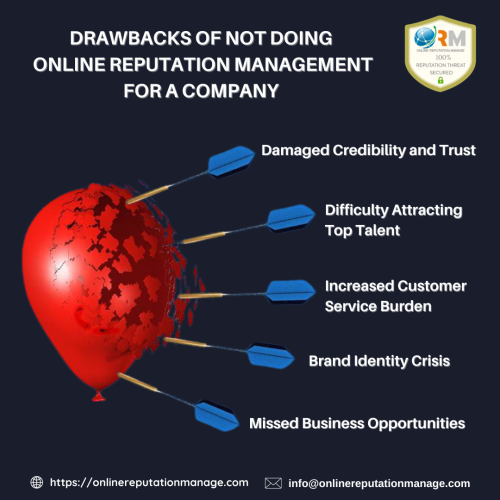
Damaged credibility and trust
Without active reputation management, a company has little control over the information that surfaces online about its brand. Negative reviews, unresolved complaints, and incorrect information can proliferate unchecked, weakening the credibility of the business and the trust of current and potential customers. Today's consumers rely heavily on internet reviews and ratings when deciding what to buy, and a bad online reputation can scare them away, resulting in missed chances and lost purchases.
Missed business opportunities
A bad online reputation directly limits a company's growth and potential. Prospective partners, collaborators, and clients frequently perform extensive web research before working with a business. If they come across a trail of unfavourable opinions, they may decide to avoid any association with the brand, which means lost commercial prospects and hindered growth.
Difficulty attracting top talent
A company's reputation influences potential employees, not just customers. Skilled, talented professionals favour organisations with a favourable reputation and a strong internet presence. When a company's online reputation is damaged, recruiting and retaining top employees becomes difficult, and its overall performance and competitiveness suffer.
Increased customer service burden
Without effective online reputation management, negative reviews and complaints may sit ignored or unanswered for long stretches. That lack of engagement intensifies customer annoyance and aggravation, and the support workload grows with it. An influx of irate consumers is hard to manage, and the business may struggle to resolve problems effectively.
Escalation of negative content
One of the worst consequences of ignoring reputation management is how quickly negative content grows in volume. Unresolved grievances and unfavourable reviews tend to spread, gain traction on social media, and attract still more unfavourable attention. The longer the company stays passive, the harder it becomes to control the narrative, and the harm to its reputation can become permanent.
Brand identity crisis
Negative online sentiment can distort a company's brand identity and messaging. When complaints and criticism dominate the brand narrative, the company's core beliefs and accomplishments get obscured. Customers' and stakeholders' perceptions of the business become warped, and that uncertainty erodes advocacy and consumer loyalty.
Competitive disadvantage
Businesses in cutthroat industries cannot afford to ignore reputation management. Without a proactive approach, rivals can exploit the bad press to gain an advantage over the struggling business. The reverse is also true: a properly managed online reputation helps a company stand out favourably from the competition.
Why should every company implement online reputation management?
Proactive reputation management
A reputation management programme lets a company take control of its online narrative proactively. By monitoring online conversations, reviews, and social media mentions, the business can address issues promptly, respond to feedback, and foster positive relationships with customers.
Building trust and credibility
A strong online reputation builds trust and credibility. Positive reviews, testimonials, and engaging content enhance a company's image and make it more appealing to customers and partners alike.
Improved customer engagement
An online reputation management agency facilitates better customer engagement. Addressing customer concerns, responding to feedback, and showing appreciation for positive reviews fosters a sense of connection and loyalty among customers.
Mitigating a crisis effectively
When a reputation crisis hits, having reputation management strategies already in place helps mitigate the damage efficiently. Quick, appropriate responses can stop a negative situation from spiralling out of control.
Enhancing SEO and online visibility
A well-managed online reputation contributes to better search engine rankings and online visibility. Positive content and interactions signal to search engines that the company is trustworthy and relevant, boosting its overall online presence.
Conclusion
Reputation management is not just an option but a necessity for companies in the digital era. Neglecting ORM invites damaging consequences for credibility, customer trust, business opportunities, and employee recruitment. A proactive approach to online reputation manage does the opposite: it lets a company control the narrative, build trust, and turn its online reputation into a strategic advantage. Embracing reputation management is not just about safeguarding a company's image; it is about securing its future in an interconnected world. If your company needs that protection, Online Reputation Manage can help you put it in place.