
How to Remove a Court Judgment or Case Record From Google in India
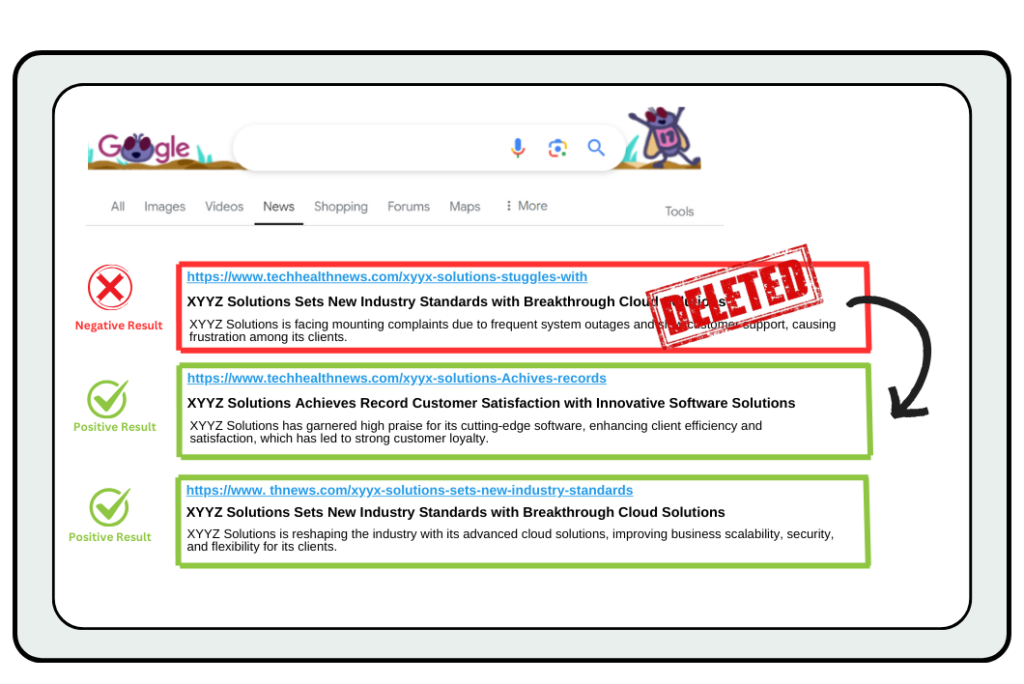
Can you remove a court judgment or case record from Google in India? Not from the court. A judgment is a public record, it stays on the High Court or district court website and on the eCourts portal, and no request to Google changes that. What can change is the copy that actually ranks when someone searches your name: the aggregator page on Indian Kanoon, CaseMine or a similar database, and the Google listing that points to it. There are four routes to that, they work at different speeds, and most people need two of them at once. This guide explains each one, what the Indian courts have said about the right to be forgotten, and where suppression takes over. It supports our negative search result removal service and sits alongside our guide to removing defamatory content from Google in India.
Why does a court case show up when someone searches my name?
Because the aggregators are built for search. Indian Kanoon, CaseMine and similar databases collect judgments from the court websites, publish each one as a clean HTML page with the party names in the title, and let Google index them. The court's own site usually serves the same judgment as a PDF behind a search form, which Google ranks poorly. So the result on page one is almost always the aggregator copy, not the court's. That matters, because the aggregator is a private company with its own removal policy, while the court is not.
The second reason is name scarcity. Most people have little else on the web under their exact name, so a single judgment page, with the name repeated in the title, the URL and the first line, can rank first for years. Acquittals, withdrawn complaints, matrimonial disputes, cheque bounce cases and consumer complaints all surface this way, and the listing rarely says how the case ended.
Route 1: Ask the aggregator, citing its own policy
Start with the site that is ranking. Every major aggregator publishes a policy on removing or anonymising judgments, usually in its terms or an FAQ, and a request that cites that policy and fits one of its categories is the fastest route there is. The categories that aggregators act on without a court order are narrow: cases where the court itself has directed anonymisation (victims of sexual offences, whose identity is protected by section 228A of the Indian Penal Code, now section 72 of the Bharatiya Nyaya Sanhita; minors; matrimonial and family court matters heard in camera), and cases where the judgment on the court website has since been corrected or withdrawn.
Write to the address the policy names, give the exact URL, the case number and the court, state which category applies, and attach the order or the court's own anonymised version if there is one. Ask for the least that solves the problem: masking your name in the title and body is agreed far more often than deleting the page, and a masked page no longer ranks for your name. Outside those categories, expect a refusal. The aggregator will say the judgment is a public record, and under the current law it is right. Keep the written refusal, because the court route below asks for it.
Timeframe: in our experience two to six weeks for an answer, then a few days to a few weeks for the Google listing to update once the page changes.
Route 2: Report personal information on the page to Google
Google does not decide whether a court record should be public, and it will not remove a judgment because it is embarrassing. It removes content from Search under its personal information policy and on a valid legal order. The policy covers government identification numbers, bank account and card numbers, contact details paired with threats, images of ID documents and signatures, and confidential medical or login details. Court records, charge sheets, affidavits and orders in property, cheque and consumer matters often carry exactly that: Aadhaar or PAN numbers, account numbers, home addresses, phone numbers. If the page shows any of them, file the personal information request against the specific URL. Google states that it "can only remove things from Google Search results", so the page stays live on the aggregator, but the listing people find goes.
If a court has ordered removal or anonymisation (Route 3), submit the order through Google's legal removal request form. Google acts on an Indian court order directed at specific URLs.
Timeframe: in our experience a few days to two weeks for a personal information request; one to three weeks for a legal removal once the order is in hand.
Route 3: The right to be forgotten in the Indian High Courts
India has no statute that lets you erase a court judgment. What it has is a line of High Court decisions, built on the Supreme Court's 2017 Puttaswamy ruling that privacy is a fundamental right, which have in specific cases ordered an aggregator and Google to take a judgment out of search. The Delhi High Court did so in 2021 as an interim measure for an acquitted petitioner (Jorawer Singh Mundy v Union of India), reasoning that a judgment of acquittal continuing to rank for his name was causing harm out of proportion to any public interest. The Kerala High Court in 2022 drew the line more tightly: a judgment in a live or recent matter cannot be erased, because open justice outweighs privacy, but in family and matrimonial matters a court can permit the name to be masked, and whether older judgments can be erased is a question it left to the legislature. In 2024 the Supreme Court stayed a Madras High Court direction that had ordered an aggregator to mask an acquitted person's name, and how far the right reaches is now before it.
What that means in practice: a petition to the High Court with jurisdiction over the case, asking for anonymisation of the judgment on the court website and a direction to the aggregator and Google, has a real chance where you were acquitted or the case was withdrawn or settled, the matter is private rather than commercial, time has passed, and the aggregator has refused in writing. It is a poor fit for a recent conviction, a commercial dispute, or a case still under appeal. The Digital Personal Data Protection Act, 2023 adds a statutory right to erasure, but it largely exempts processing required for judicial functions and has not yet been tested on court records.
Timeframe: in our experience three to twelve months for a High Court petition, depending on the bench and whether interim relief is granted. The removal itself, once ordered, follows within weeks.
Route 4: Suppression, when the record is accurate and stays
Most case records are accurate and do not fit Routes 1 to 3. They stay, and the question becomes where they sit. Suppression means building and promoting stronger pages that carry your name, a personal or company website, professional profiles, press, verified business listings, interviews, until the judgment drops off the page people actually read. It is the only route that works on every judgment regardless of its content, and it is the one route you should start on day one, in parallel with the others, because each of them takes time and your name is being searched today.
Suppression also changes what ChatGPT and Google's AI Overview say, because both are assembled from what already ranks. Our post on what to do when someone searches your name plus scam shows the method on the most common trust query.
Timeframe: 30 to 90 days for a single judgment page, longer for a cluster of related listings such as a judgment plus the news coverage of it.
In what order should you run these routes?
- Read the judgment page honestly: does it fall into a category the aggregator already masks, does it carry personal data Google removes, and how did the case end?
- Send the aggregator request the same week, citing its policy. Keep the reply.
- File a Google personal information request for any identification or account numbers on the page.
- Begin suppression immediately; do not wait on the other routes.
- Take the High Court route only where the case fits the right to be forgotten line and the aggregator has refused.
One evidence file from the start, with dated screenshots, the URLs, the case details and every reply, serves all four routes. Our post on how long online reputation management takes sets realistic durations for each.
What should you not do?
Do not post a comment, a reply or a counter-page arguing the case; it creates fresher content about the dispute, and it usually ranks. Do not pay anyone who guarantees that a judgment will be deleted from Indian Kanoon or from Google; no one can guarantee that, and a court record cannot be bought off the internet. Do not send legal threats to the aggregator for publishing a public record; the publication is lawful, and the threat tends to end up quoted. Work on the policy, the personal data, the court and the ranking, not on the people who published the page.
If a court judgment or case record is ranking for your name in India, call +91 8700 450 757info@onlinereputationmanage.comemail info@onlinereputationmanage.com or contact the team and we will assess the page privately and tell you which route applies before you spend anything.