
Can You Remove a News Article From Google Search? 7 Options Explained
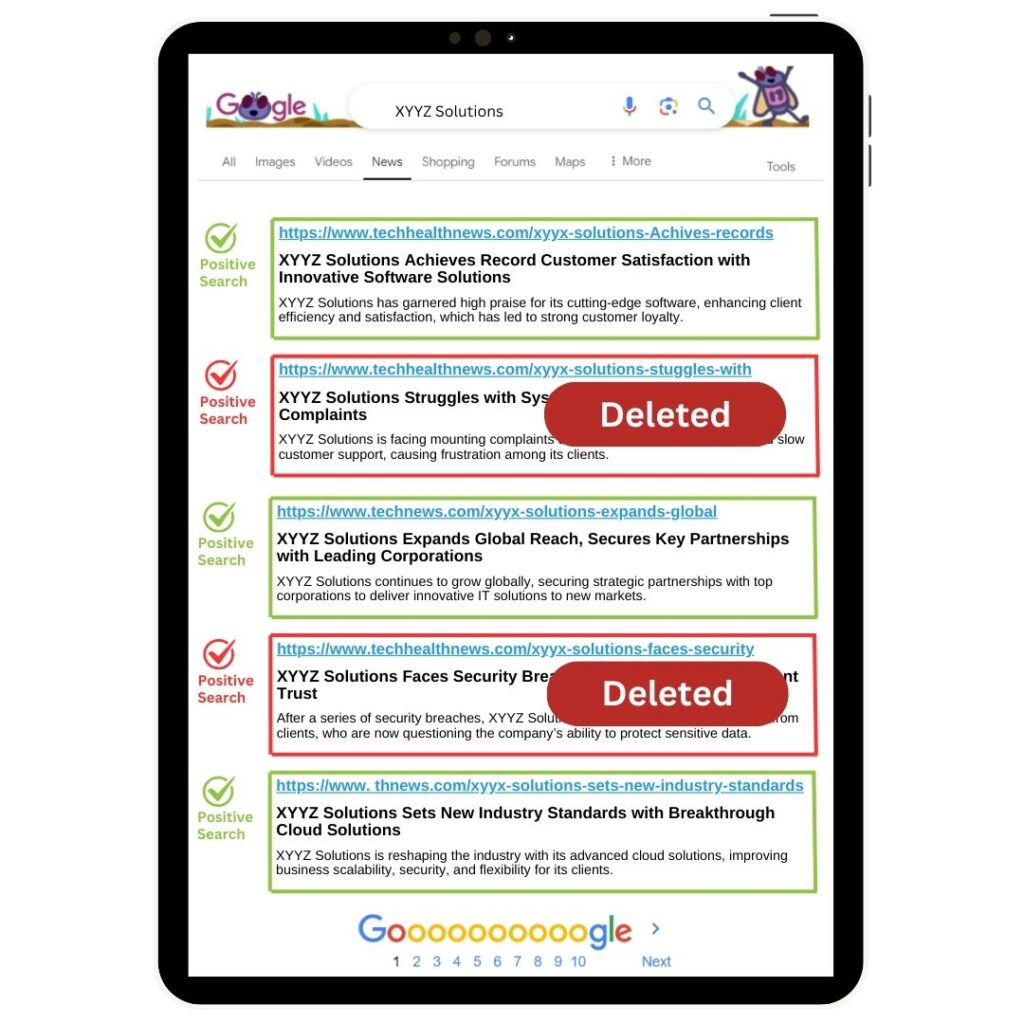
Can you remove a news article from Google search? Sometimes, and more often than people expect, but almost never by simply asking Google to delete it. Google's own policy is that if content "is about something important or newsworthy, like the news, Google might not take it down", and Google "can only remove things from Google Search results", not from the website that published them. So the realistic question is which of seven routes fits your article. This guide explains each one, when it works, and when you are better off with suppression. It supports our negative search result removal service. If you would rather have a specialist assess your article and run the routes for you, see our negative news removal service.
Option 1: Can the publisher correct or update the article?
This is the first route and the most underused. If the article is factually wrong, contact the publisher's editor or corrections desk with evidence. If the story was true at the time but has moved on, ask for an update: the charge was dropped, the dispute was settled, the regulator closed the file. Publishers are far more willing to add a line than to delete a piece, and an updated headline changes what a searcher sees, what the snippet says, and what AI summaries repeat. In our experience an outdated article corrected by the publisher is one of the most common outcomes on a removal engagement.
Option 2: Will the publisher unpublish it?
Occasionally, and only for a reason. Articles get unpublished when they were defamatory, when the subject was a minor, when the piece breached the outlet's own standards, or when the story concerned a private individual and the public interest has faded. Ask in writing, be specific about the harm, and propose the least the publisher can do. A full takedown is the hardest ask; a name redaction or an anonymised version is often accepted instead.
Option 3: Can the publisher de-index the page instead of deleting it?
Yes, and this is the compromise many outlets prefer. The article stays live on their site but is tagged so search engines stop listing it. The page still exists for anyone who has the link, but it disappears from a search on your name. For most people that is the outcome that matters. It is worth asking for explicitly, because editors who refuse to delete will often agree to de-index.
Option 4: Does the article qualify for removal under Google's policies?
Google removes certain content from Search on request regardless of the publisher. Its personal information removal policy covers your address, phone number or email, government ID numbers, bank account or card numbers, images of your signature or ID, private records such as medical records, and confidential login details. It also covers doxxing content, where personal details are paired with "explicit or implicit threats against you". A news article rarely falls into these categories, but a piece that publishes your home address or ID number can be reported for that specific content. Our guide to removing defamatory content in India covers the legal routes that sit alongside this policy.
Option 5: Has the article already changed or been removed?
If the publisher has updated or deleted the piece but Google still shows the old headline and snippet, the search result is stale rather than live. Google offers a route for reporting outdated results so the cached listing is refreshed to match what is on the page now, or dropped if the page is gone. This is a housekeeping step, not a removal, but it is the step people forget after they win a correction.
Option 6: Is there a legal ground?
Where an article is genuinely defamatory, publishes private information unlawfully, or infringes a right, a legal notice to the publisher and, where applicable, a court order can compel removal or de-indexing. This is slower and costlier than the routes above and it is not a fit for an article that is accurate but unflattering. Our post on dealing with online slander explains why anonymous and offshore content makes the legal route hard on its own, and why it works best paired with the other options.
What should you never do?
Do not comment under the article to argue with it, and do not send an angry email to the reporter. Both create a second, fresher piece of content about the dispute, and the second one is often worse than the first. Do not pay a link-removal service that promises guaranteed deletion of a news piece; no one can guarantee that, and the publisher relationship such services claim to have usually does not exist. Do not build dozens of thin pages in a hurry to bury it; search engines treat that as spam and it can drag your genuine pages down with it.
Option 7: What if nothing above applies? Suppression.
Most negative news articles are accurate, newsworthy and hosted by a publisher who will not budge. The article stays. What changes is where it sits. Suppression means building and promoting stronger, more relevant pages about you, your own site, professional profiles, recent coverage, verified review profiles, until the old article drops off page one for searches on your name. In our experience suppression generally runs 30 to 90 days for a single link, longer for a cluster of coverage. It also feeds every AI answer, because ChatGPT and Google's AI Overviews read what ranks. Our post on why Google AI Overviews show negative reviews explains the mechanics on the AI side, and our crisis recovery guide covers the case where the coverage is a wall rather than a single story.
Which option should you try first to remove a news article from Google?
Work down the list in order. Correction and update cost the least and change the most. De-indexing is the compromise to ask for when unpublishing is refused. Google policy removal applies only to specific personal-data content. Legal routes fit a narrow set of cases. Suppression is the fallback that always works, just more slowly. Most engagements combine two or three of these, and the right mix depends on what the article says, who published it and how it ranks today.
If a news article is sitting on page one for your name, call +91 8700 450 757info@onlinereputationmanage.comemail info@onlinereputationmanage.com or contact the team and we will tell you privately which of the seven routes applies to it.